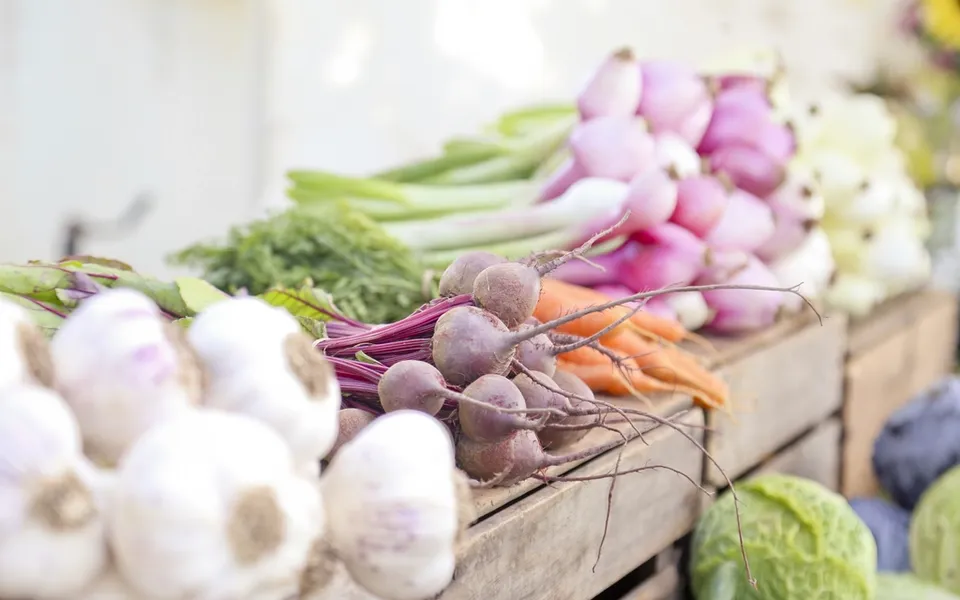
Farmers' markets in Lunenburg County operate as weekly gathering places as much as shopping venues, bringing growers, bakers, fishers and neighbours together in arenas, parks and community halls. On Nova Scotia's South Shore, where farms are small and towns are a short drive apart, buying food from the person who produced it is an ordinary part of the week, not a special outing. Knowing which market runs on which day, and what to expect from each season, makes it easier for newcomers and visitors to take part.
A Weekly Rhythm Across the County
The markets are spread through the week, so it is possible to shop at more than one without much planning.
Lunenburg on Thursdays
The Lunenburg Farmers' Market runs on Thursday mornings all year. Nova Scotia's tourism listing shows it at the Lunenburg Arena through the warmer months, opening at eight o'clock, and at the neighbouring community centre in winter, with a slightly later start. A market that keeps going through January is unusual in a town of about 2,400 people, and it means regular customers can keep buying from the same vendors when the summer visitors have gone.
Bridgewater on Saturdays
The Bridgewater Farmers' Market is seasonal. In 2025 it ran on Saturdays from early May until late December, from nine in the morning until one in the afternoon, with a handful of evening and holiday markets added to the calendar. It is organized by the Bridgewater Farmers' Market Association, a registered non-profit society, and its vendors come from within roughly a 30 to 45 minute drive of the town.
Hubbards on Saturdays
At Hubbards, where Lunenburg County meets the Halifax region, the Hubbards Farmers' Market sets up on Saturday mornings from May to October at the Hubbards Barn and Community Park. It serves the communities around St. Margaret's Bay as well as the Chester area, and it is a member of Farmers' Markets of Nova Scotia, the provincial association for markets of this kind.
Smaller seasonal markets and community sales also appear in places such as Mahone Bay, Chester and New Germany. Their days and locations change from year to year, so local notice boards and municipal event listings are the best guide.
What Local Food Looks Like Here
Lunenburg County's agriculture is built on small, mixed operations instead of large single-crop farms. The land is rolling and wooded, fields are modest in size, and many producers combine several lines of work. That shows in what turns up on market tables. The Bridgewater market's listing gives a fair sample of the range: seasonal greens, berries, asparagus and rhubarb; grass-fed beef and pork; German-style sausages and cold cuts; farm eggs; fresh herbs, flowers and transplants; mussels; organic breads and pastries; local wines and ciders; and prepared foods to eat on the spot.
The German-style sausage is not an accident. Much of the county was settled in the 1750s by German-speaking Protestants, and their influence persists in local foodways, from sauerkraut to the smoked sausage often called Lunenburg sausage. The county is also known for its Christmas tree farms, and balsam fir wreaths and greenery become a market staple in the weeks before the holidays.
Seafood appears as well, though less than a visitor might expect given the fishing heritage. The commercial fishery sells mainly through processors and wholesalers. What reaches the markets tends to be small-scale: shellfish, smoked fish and prepared seafood dishes sold by individual vendors.
Shopping Through the Seasons
The market year follows the growing season closely, and the selection shifts from month to month.
- Spring: Seedlings and transplants, rhubarb, asparagus, early greens, eggs, maple products and baking.
- Summer: Strawberries, then raspberries and blueberries, along with new potatoes, peas, beans, tomatoes, cut flowers and the widest choice of vendors.
- Autumn: Apples, squash, root vegetables, cabbage, garlic, cider and preserves.
- Winter: Storage crops, greenhouse greens, meat, bread, cheese, preserves and crafts, mostly at the year-round Lunenburg market.
A few habits make market shopping easier. Arriving early gives the best choice of produce and bread, which often sell out before closing. Many vendors now accept cards, but small bills are still useful. Reusable bags and a cooler in the car help on warm days, particularly for anyone buying meat or shellfish and then driving home along the coast.
More Than a Place to Buy Groceries
In a rural county, a weekly market does several jobs at once. For producers, it is a way to sell directly and keep the full retail price, which can make the difference in whether a few acres of vegetables or a small bakery is viable. Markets also serve as a low-cost testing ground for new food businesses, which can try out products at a stall before committing to a storefront.
For residents, the market is one of the few places where people from different communities and age groups cross paths on a regular schedule. Live music, community information tables and fundraising stalls are common. Because transactions are short and informal, it is easy to exchange a few words with a vendor or the person next in line, and regular customers come to know the people who grow their food by name.
That matters especially for people who have recently moved to the area. Rural life can be isolating at first, particularly for those who work from home and have no workplace to provide introductions. A weekly errand that reliably involves seeing the same faces is a simple way to become known in a small community.
Beyond Market Day
Markets are the most visible part of the local food system, but not the only one. Farm stands and u-pick operations open along rural roads from strawberry season through apple season. Some farms sell seasonal shares, in which customers pay ahead for a weekly box of vegetables. Year-round farm markets and independent grocers in the county stock local produce, meat and dairy between market days, and a growing number of restaurants name the farms that supply them.
None of this replaces a supermarket for most households. What it offers is a reliable source of fresh, locally produced food for a good part of the year, and a direct line between the people who produce it and the people who eat it. In a county of fewer than 50,000 residents, that connection is close enough to be personal, and it is one of the clearer expressions of how the South Shore's communities support one another.